
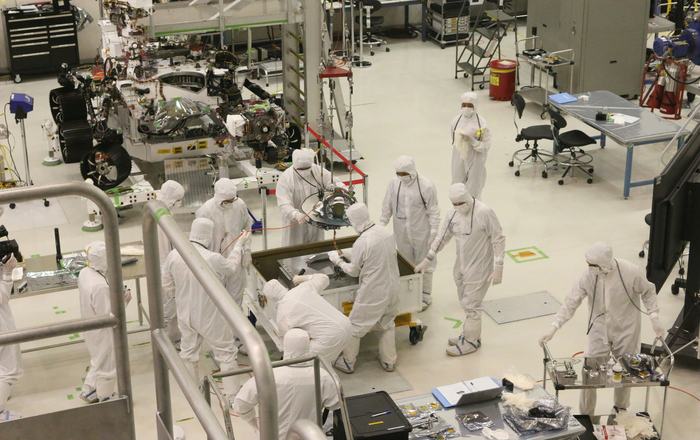
Satellite Manufacturing
The production and assembly phase where components are fabricated, integrated, and tested. Manufacturing processes involve hazardous materials, energy-intensive operations, and generate waste streams requiring careful management.
Risks (15)
Alumina particle emissions
HighSolid rocket boosters release alumina particles that catalyse ozone destruction in the upper atmosphere.
1 obligation2 opportunitiesBattery thermal runaway
HighRisk of lithium-ion batteries overheating and causing fire or explosion, potentially leading to satellite fragmentation and debris creation.
1 obligationBlack carbon deposition in stratosphere
HighRocket exhaust deposits black carbon particles in the stratosphere, absorbing solar radiation and contributing to localised warming and ozone depletion.
1 obligation2 opportunitiesCollision with operational satellites
HighRisk of a decommissioned or uncontrolled satellite colliding with active spacecraft, potentially creating a cascading debris event (Kessler Syndrome).
2 obligations2 opportunitiesE-waste from decommissioned electronics
MediumSatellite avionics contain hazardous materials that contribute to e-waste concerns if not properly managed during end-of-life.
1 obligation2 opportunitiesFragmentation from residual fuel
HighResidual propellant remaining in decommissioned satellites can cause explosions, generating significant debris fields.
2 obligations1 opportunityHeat pipe fluid toxicity
LowWorking fluids in satellite heat pipes (often ammonia or acetone) are toxic and pose risks during manufacturing and in the event of leakage.
1 obligationHydrazine fuel leakage
HighLeakage of highly toxic hydrazine propellant during handling, fuelling, or in-orbit operations, posing severe health and environmental hazards.
1 obligation2 opportunitiesLaunch site soil contamination
MediumSpillage of propellants and combustion byproducts contaminate soil and groundwater at launch facilities.
1 obligation2 opportunitiesOrbital slot overcrowding in GEO
HighLimited geostationary orbital slots are becoming increasingly congested, raising collision risks and limiting future access.
1 obligation2 opportunitiesRare earth element supply chain risks
MediumDependence on limited sources of rare earth elements for electronics and solar cells creates supply vulnerability and drives environmentally destructive mining practices.
1 obligation1 opportunityRF spectrum congestion
MediumIncreasing satellite numbers cause radio frequency spectrum congestion, degrading signal quality for all users and increasing interference.
1 obligationSatellite reflectivity impact on astronomy
MediumBright satellites create light streaks in telescope images, severely impacting ground-based astronomical research.
1 opportunitySolar panel toxic manufacturing waste
MediumProduction of photovoltaic cells generates toxic byproducts including cadmium compounds, silicon tetrachloride, and solvent waste.
1 obligation1 opportunityUncontrolled re-entry debris
HighSatellite components surviving atmospheric re-entry may impact populated areas, posing risks to human safety and causing ground contamination.
3 obligations1 opportunityNo risks match the current filters.